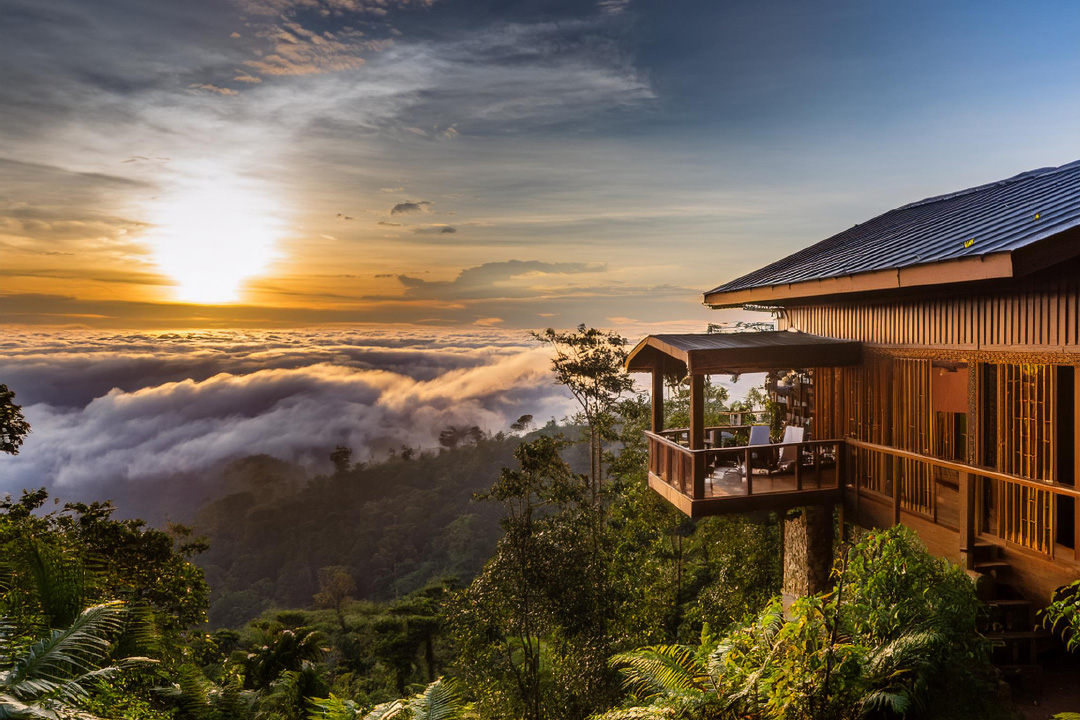
There are few travel experiences more extraordinary than standing beneath a darkening sky while the Moon slowly moves across the face of the Sun. For a few unforgettable minutes, daylight fades, temperatures can drop, stars and planets appear, and the Sun’s normally invisible outer atmosphere becomes visible. A total solar eclipse is not simply an astronomical event—it can be an extraordinary reason to travel.
And if you are thinking about planning an eclipse trip, the good news is that there are several spectacular opportunities coming up.
The August 12, 2026 total solar eclipse is taking place today, crossing Greenland, Iceland, the Atlantic Ocean, Spain and a small part of Portugal. NASA confirms that totality is visible along a narrow path, while much of Europe and parts of North America and Africa experience a partial eclipse. (NASA Science)
But you haven’t missed the opportunity to combine travel and astronomy. The next major total solar eclipse will occur on August 2, 2027, crossing southern Spain, Morocco, Algeria, Tunisia, Libya, Egypt, Saudi Arabia and Yemen. NASA lists this as the next total solar eclipse after the 2026 event. (NASA Science)
Even more exciting for travelers is the July 22, 2028 total solar eclipse, which will cross Australia and New Zealand.
So where should you go?
The answer depends on what matters most to you: length of totality, weather, accessibility, scenery, culture, photography, cost or the possibility of combining the eclipse with a longer vacation.
Let’s look at the best possibilities.
What Makes a Total Solar Eclipse So Special?
A solar eclipse occurs when the Moon passes between Earth and the Sun and temporarily blocks some or all of the Sun’s disk.
A partial solar eclipse occurs when the Moon covers only part of the Sun.
An annular eclipse happens when the Moon passes in front of the Sun but appears slightly smaller than the Sun, leaving a brilliant “ring of fire.”
A total solar eclipse is the truly spectacular event. The Moon completely covers the visible surface of the Sun, revealing the solar corona around the black disk of the Moon.
The difference between watching a partial eclipse and standing inside the path of totality is enormous. During totality, the landscape can become surprisingly dark, the horizon may glow with a strange sunset-like light, and the corona becomes visible.
For photographers, it is also one of the most challenging and rewarding subjects imaginable.
The August 2, 2027 Eclipse: The Big One
If you are planning an eclipse trip from 2026 onward, the August 2, 2027 total solar eclipse deserves particular attention.
The eclipse path crosses southern Europe, North Africa and the Middle East. NASA identifies southern Spain, Morocco, Algeria, Tunisia, Libya, Egypt, Saudi Arabia and Yemen as locations where totality will be visible. (NASA Science)
The 2027 eclipse is especially attractive because the path crosses regions with generally favorable conditions for summer travel, and parts of the path offer an exceptionally long period of totality.
Some locations can experience more than six minutes of totality, making this one of the most exciting eclipse opportunities of the decade.
For travelers, that creates a wonderful choice: you can combine a once-in-a-lifetime astronomical event with ancient civilizations, Mediterranean landscapes, deserts, historic cities and world-famous archaeological sites.
1. Egypt: Perhaps the Ultimate Eclipse Destination
If the goal is to combine an extraordinary eclipse with an extraordinary destination, Egypt may be the most memorable choice of all.
The August 2, 2027 eclipse crosses Egypt, including the region around Luxor. The country is particularly interesting for eclipse travelers because you can combine the event with the temples of Luxor and Karnak, the Valley of the Kings, the Nile and other ancient sites.
Imagine watching totality in the Egyptian landscape and then spending the following days exploring monuments built thousands of years ago.
That combination is difficult to beat.
Egypt also has another advantage: August is normally a very dry month, particularly in southern Egypt. Weather is always something eclipse travelers must take seriously, but the dry desert environment can make Egypt an appealing option.
The downside is obvious: August can be extremely hot.
If you choose Egypt, plan your accommodation and transportation carefully. Consider arriving several days before the eclipse rather than flying in at the last minute. Major eclipse destinations can experience enormous demand.
For official destination information and practical travel planning, visit the official Egypt tourism website.
2. Spain: The Easiest European Eclipse Adventure
For travelers who prefer Europe, southern Spain is one of the most attractive options for 2027.
Spain is already becoming an important eclipse destination because of the 2026 total eclipse. The country’s official tourism website provides information about destinations, transportation, accommodation, weather, practical travel matters and activities. (Turismo de España)
Spain’s official tourism website
The major advantage of Spain is accessibility.
You have excellent international air connections, extensive rail networks, good roads, a huge range of accommodation and an enormous variety of things to do before and after the eclipse.
You can turn the eclipse into a longer Spanish journey.
For example, you might combine the eclipse with:
- Andalusia
- Seville
- Córdoba
- Granada
- Málaga
- Cádiz
- the Costa del Sol
- historic white villages
- Mediterranean beaches
For travelers who don’t want an expedition into a remote desert, Spain may be the easiest choice.
It also provides excellent opportunities for combining eclipse photography with architecture, landscapes and cultural photography.
3. Morocco: Eclipse Watching Among Mountains and Desert
Morocco is another fascinating destination for the August 2, 2027 eclipse.
The country combines dramatic landscapes with an extraordinary cultural heritage. You can potentially combine your eclipse adventure with Marrakech, the Atlas Mountains, the Sahara, historic medinas and Atlantic coastal towns.
Morocco’s official tourism website
Morocco’s official tourism organization provides information about destinations, transportation, accommodation, cultural experiences, nature and practical travel planning. (Visit Morocco)
For photographers, Morocco is particularly appealing.
The combination of eclipse photography and desert landscapes could produce spectacular images. A carefully chosen location with a low horizon could provide an impressive foreground beneath the eclipsed Sun.
Morocco is also a good option for travelers who want to turn the eclipse into a broader cultural journey rather than making astronomy the entire focus of the trip.
4. Tunisia: A Mediterranean Alternative
Tunisia is another country crossed by the 2027 eclipse.
It can be an interesting alternative to more heavily promoted destinations such as Egypt or southern Spain.
Tunisia offers Mediterranean beaches, Roman ruins, Islamic architecture, historic towns and desert landscapes.
One attraction for travelers is the opportunity to combine the eclipse with places such as ancient Carthage, El Jem and the southern desert regions.
Before making reservations, however, check current official travel advisories, entry requirements and local conditions.
For tourism information, the country’s official destination portal is:
Discover Tunisia – official tourism information
5. Saudi Arabia: An Unusual Eclipse Adventure
The 2027 eclipse path also crosses Saudi Arabia, offering a very different eclipse experience.
Saudi Arabia has invested heavily in tourism infrastructure and has opened many destinations to international visitors in recent years.
An eclipse trip could potentially be combined with Riyadh, AlUla, desert landscapes and archaeological attractions.
For travelers who enjoy discovering destinations that are less familiar to mainstream tourists, Saudi Arabia could be particularly interesting.
Visit Saudi – official tourism website
As with any international trip, check the latest visa, entry, transportation and safety information before booking.
6. Algeria and Libya: For Experienced Adventurers
The 2027 eclipse also crosses Algeria and Libya.
Geographically, both are fascinating possibilities. The North African desert offers enormous open horizons, which are potentially excellent for eclipse observation.
However, accessibility and practical travel considerations are more complicated than in Spain or Morocco.
For most casual eclipse travelers, these countries are unlikely to be the simplest choices. Travelers considering them should pay particular attention to current government travel advice, local regulations, transportation arrangements and professional local support.
In other words, the best eclipse location isn’t necessarily the most remote one.
The most successful eclipse trip is one where you can reach your viewing location safely, remain there comfortably and have a reasonable backup plan if weather or logistics cause problems.
7. The August 12, 2026 Eclipse: Spain, Iceland and Greenland
Although the 2026 eclipse is happening now, it deserves mention because it demonstrates how dramatically different eclipse destinations can be.
NASA’s eclipse information confirms that totality crosses Greenland, Iceland, Spain, northern Russia and a small part of Portugal. (NASA Science)
Spain offers easier access and extensive tourism infrastructure.
Iceland offers dramatic volcanic landscapes, glaciers, waterfalls and black-sand beaches.
Greenland offers an entirely different experience, with Arctic landscapes and enormous expanses of wilderness.
The weather, however, is one of the major considerations.
Iceland is famous for spectacular scenery but also for unpredictable weather. That means an eclipse traveler should never choose a location solely because it looks fantastic on a map.
8. Iceland: The Eclipse Plus an Incredible Road Trip
For travelers who enjoy nature and photography, Iceland is difficult to resist.
Even without an eclipse, Iceland offers glaciers, volcanoes, waterfalls, geothermal areas, black-sand beaches and dramatic coastlines.
The official Iceland tourism website provides information about transportation, accommodation, destinations, scenic routes, national parks, weather-related resources and activities. (Visit Iceland)
Visit Iceland – official travel information
The 2026 eclipse made Iceland especially attractive because totality crossed the country.
If you missed it, Iceland remains a fantastic destination for aurora photography, landscapes and astronomy.
9. Greenland: For the Ultimate Remote Eclipse Experience
Greenland is for travelers who want something completely different.
A total eclipse against an Arctic landscape could be one of the most unusual photographic experiences imaginable.
The challenge is accessibility.
You cannot approach Greenland like a normal European road trip. Flights, accommodation, weather and transportation between communities require considerably more planning.
That is exactly what makes it appealing to some adventurous travelers.
If you like remote travel, wilderness and photography, Greenland could become one of the most memorable eclipse destinations you ever visit.
Visit Greenland – official tourism website
10. Portugal: A Small Part of the 2026 Path
Portugal receives only a small portion of the 2026 total-eclipse path, but the country is worth considering as part of a broader Iberian trip.
Portugal is especially attractive for travelers who enjoy slower travel.
Lisbon, Porto, the Douro Valley, historic towns, Atlantic beaches and the country’s excellent food make it easy to build a longer vacation around an astronomical event.
Visit Portugal – official tourism website
For a traveler who doesn’t want an eclipse trip to feel like a specialized expedition, Portugal can be an excellent base for combining astronomy with culture, food and scenic travel.
11. The February 6, 2027 Annular Eclipse
Before the spectacular August 2027 total eclipse, there is another interesting event.
On February 6, 2027, an annular solar eclipse will cross parts of South America and Africa, including Chile, Argentina, Uruguay, Brazil, Ivory Coast, Ghana, Togo, Benin and Nigeria. NASA lists partial visibility across much larger areas. (NASA Science)
An annular eclipse is different from totality because the Moon does not completely cover the Sun. Instead, a brilliant ring of sunlight remains visible.
It is still a spectacular astronomical event, but the viewing experience is not the same as totality.
For travelers, Argentina and Chile are particularly attractive because they already offer spectacular landscapes and strong tourism infrastructure.
Visit Argentina – official tourism website
Chile is another excellent destination for astronomy enthusiasts because of its exceptionally dry northern deserts and world-famous astronomical observatories.
Chile Travel – official tourism website
12. The July 22, 2028 Total Solar Eclipse: Australia and New Zealand
If you want to plan further ahead, the July 22, 2028 total solar eclipse should be on your radar.
The eclipse will cross Australia and New Zealand and is already attracting attention from eclipse travelers.
This may be one of the most appealing future eclipse trips for people who want to combine astronomy with a major adventure.
Australia offers enormous geographic variety, from tropical Queensland to deserts and coastal landscapes.
New Zealand provides mountains, lakes, glaciers, forests and some of the world’s most dramatic scenery.
Tourism Australia – official tourism website
Tourism New Zealand – official tourism website
For photographers, the possibilities are enormous.
Imagine photographing totality above an Australian landscape or against a dramatic New Zealand mountain backdrop.
The biggest challenge is simply distance. Depending on where you live, getting to Australia or New Zealand can require a major international journey.
That makes the 2028 eclipse ideal for a longer vacation rather than a quick weekend trip.
13. Which Eclipse Destination Is Best for Photographers?
If photography is your main reason for traveling, your priorities should be slightly different.
You need to consider:
Weather: A beautiful location is useless if clouds cover the Sun.
Landscape: Mountains, deserts, coastlines and historic architecture can create spectacular foregrounds.
Accessibility: You need to reach your location before the eclipse and preferably have alternative locations nearby.
Totality duration: Longer totality gives you more time to photograph the corona.
Horizon: A clear horizon is particularly important if the Sun is relatively low in the sky.
Crowds: Remote locations can sometimes provide a better photographic experience than famous cities.
A tripod, telephoto lens, solar filter, spare batteries and plenty of memory cards are obvious essentials. But don’t spend the entire eclipse staring at your camera.
Look up.
The experience of seeing totality with your own eyes is something photographs cannot completely reproduce.
14. How Far in Advance Should You Plan an Eclipse Trip?
The answer is simple: earlier than you think.
Eclipse destinations can experience extraordinary demand.
The 2026 eclipse has already demonstrated how quickly accommodation can become expensive or unavailable. Recent reporting described major visitor interest in Spain and significant price increases in some eclipse destinations. (AP News)
For a major eclipse such as 2027, consider booking accommodation well ahead of time.
Ideally:
- Choose your country.
- Identify the path of totality.
- Study historical weather patterns.
- Select several possible viewing locations.
- Book refundable accommodation where possible.
- Plan transportation.
- Check passport and visa requirements.
- Monitor official weather forecasts closer to the event.
- Have a backup viewing location.
- Arrive several days before eclipse day.
That last point is particularly important.
Do not plan to arrive on the morning of the eclipse.
A single road closure, delayed flight or traffic jam could turn your once-in-a-lifetime experience into a very expensive disappointment.
15. Don’t Forget Eclipse Eye Safety
Solar eclipses are spectacular, but looking directly at the uneclipsed or partially eclipsed Sun can seriously damage your eyes.
Use properly certified solar viewing equipment and follow instructions from reputable astronomical organizations.
Ordinary sunglasses are not sufficient.
Cameras and binoculars also require appropriate solar filters. Never look through an unfiltered optical device at the Sun.
During the brief period of totality, when the Sun is completely covered, the viewing conditions are different—but you must put your solar protection back on immediately as the bright solar surface begins to reappear.
16. How to Choose Between Spain, Morocco and Egypt in 2027
If you are trying to decide where to go for the August 2027 eclipse, here is a simple way to think about it.
Choose Spain if:
- You want easy European travel.
- You prefer good infrastructure.
- You want to combine the eclipse with cities and culture.
- You want extensive transportation choices.
- You prefer a relatively straightforward trip.
Choose Morocco if:
- You want culture and landscapes.
- You enjoy photography.
- You want mountains and desert.
- You prefer something more adventurous than mainstream Europe.
- You want to combine the eclipse with a longer North African trip.
Choose Egypt if:
- You want an exceptionally memorable historical setting.
- You are fascinated by ancient civilizations.
- You want to combine the eclipse with the Nile and archaeological sites.
- You are prepared for very hot August conditions.
- You are comfortable planning a more structured trip.
There is no universally perfect destination.
The best destination is the one where the eclipse, weather, accessibility and overall travel experience come together for you.
17. Make the Eclipse the Centerpiece, Not the Entire Vacation
One of the best pieces of advice for eclipse travelers is not to make the eclipse your entire trip.
A total eclipse lasts only a few minutes.
Your vacation can last two or three weeks.
If you’re traveling to Egypt, explore the Nile and ancient temples.
If you’re going to Morocco, explore the Atlas Mountains and desert.
If you’re traveling through Spain, enjoy the historic cities, food and landscapes.
If you’re heading to Australia, turn the eclipse into a major road trip.
If you’re visiting New Zealand, combine the eclipse with hiking, wildlife and scenic journeys.
This approach also makes the trip worthwhile even if weather prevents you from seeing the eclipse.
18. The Best Upcoming Eclipse Destinations at a Glance
| Eclipse | Type | Main Travel Destinations | Best For |
|---|---|---|---|
| February 6, 2027 | Annular | Argentina, Chile, Brazil, Africa | Ring-of-fire eclipse |
| August 2, 2027 | Total | Spain, Morocco, Tunisia, Algeria, Libya, Egypt, Saudi Arabia | Long totality and cultural travel |
| July 22, 2028 | Total | Australia, New Zealand | Major adventure and photography |
| January 26, 2028 | Annular | South America, Antarctica and Pacific regions | Remote eclipse adventure |
| January 14, 2029 | Partial/other eclipse visibility | Various regions | Regional observation |
The dates and visibility regions can change in practical importance depending on your exact viewing location, so always check current eclipse maps and astronomical information before making final travel arrangements. NASA’s future-eclipse database is an excellent starting point. (NASA Science)
19. Essential Eclipse Travel Resources
If you are seriously considering an eclipse trip, bookmark a few reliable resources.
NASA Eclipse Information
NASA provides eclipse maps, dates, visibility information and educational material.
Spain
Official Spain Tourism – spain.info
Iceland
Official Iceland Tourism – Visit Iceland
Greenland
Official Greenland Tourism – Visit Greenland
Portugal
Official Portugal Tourism – Visit Portugal
Morocco
Official Morocco Tourism – Visit Morocco
Tunisia
Official Tunisia Tourism – Discover Tunisia
Egypt
Official Egypt Tourism – Experience Egypt
Saudi Arabia
Official Saudi Tourism – Visit Saudi
Australia
Official Australia Tourism – Tourism Australia
New Zealand
Official New Zealand Tourism – Tourism New Zealand
Argentina
Official Argentina Tourism – Visit Argentina
Chile
Official Chile Tourism – Chile Travel
Conclusion
A solar eclipse is one of the best reasons to build a travel adventure around a single moment. Unlike a conventional tourist attraction, an eclipse is temporary, geographically precise and impossible to experience in exactly the same way again.
The immediate future offers some remarkable opportunities.
The August 2, 2027 total solar eclipse is arguably the standout event, with a path stretching from southern Europe across North Africa and into the Middle East. Egypt, Morocco and southern Spain are particularly compelling choices because they combine access to the eclipse with extraordinary cultural and photographic opportunities. NASA confirms the broad path of totality across these regions. (NASA Science)
Then comes the July 22, 2028 total eclipse across Australia and New Zealand, offering another spectacular opportunity for travelers willing to venture farther afield.
The key is to think of an eclipse not simply as an astronomical event but as the centerpiece of a journey. Choose a destination you would enjoy even without the eclipse, arrive early, study the weather, have a backup plan and give yourself enough time to enjoy the country.
And when the moment finally arrives, put the camera down for a few seconds.
Stand still.
Look upward.
As the Moon completely covers the Sun and the sky suddenly transforms around you, you will understand why people travel thousands of kilometers to experience a few minutes of darkness in the middle of the day.
Sometimes the greatest travel experiences are measured not in days, but in minutes.

Absolutely. I would add a timeline section to the article so readers can quickly see the most important upcoming solar and lunar eclipses. NASA’s current eclipse calendar confirms the 2026–2027 dates and visibility regions. (NASA Science)
Eclipse Events Timeline: 2026–2030
If you are planning your travels around astronomical events, it helps to have a clear eclipse calendar several years ahead. The following timeline highlights the most interesting upcoming total, annular and lunar eclipses, with particular emphasis on events that could make memorable travel experiences.
2026 — A Year of Spectacular Eclipses
August 12, 2026 — Total Solar Eclipse
Type: Total solar eclipse
Best-known destinations: Greenland, Iceland, Spain, Portugal and Russia
The first major event in this timeline is the August 12, 2026 total solar eclipse.
The path of totality crosses Greenland, Iceland, Spain, Russia and a small part of Portugal. A much larger area—including much of Europe, Africa and parts of North America—experiences a partial eclipse. (NASA Science)
Best travel choices: Iceland and Spain
Photography potential: ★★★★★
Travel appeal: ★★★★★
August 27–28, 2026 — Partial Lunar Eclipse
Type: Partial lunar eclipse
Visible from: The Americas, Europe, Africa and Western Asia
Only a few weeks after the August solar eclipse, another astronomical event arrives: a partial lunar eclipse.
Unlike a solar eclipse, you do not need special eclipse glasses to watch a lunar eclipse. The event can be enjoyed with the naked eye, binoculars or a camera.
Best travel idea: Find a location with a dark sky and an interesting foreground—such as mountains, an old city or coastline.
2027 — The Year Eclipse Travelers Should Watch
February 6, 2027 — Annular Solar Eclipse
Type: Annular solar eclipse
Major visibility: South America and Africa
The year begins with an annular solar eclipse, sometimes called a ring-of-fire eclipse.
The annular eclipse will be visible in parts of Chile, Argentina, Uruguay, Brazil, Ivory Coast, Ghana, Togo, Benin and Nigeria. Much larger regions will experience a partial eclipse. (NASA Science)
Best travel choices: Argentina or Chile
Photography potential: ★★★★★
Travel appeal: ★★★★★
This could be an excellent opportunity for travelers who want to combine astronomy with South American landscapes.
February 20–21, 2027 — Penumbral Lunar Eclipse
Type: Penumbral lunar eclipse
Visibility: Large parts of the Americas, Europe, Africa, Asia, Australia and Antarctica
A penumbral lunar eclipse is much more subtle than a total lunar eclipse. The Moon passes through Earth’s outer shadow, producing a relatively modest darkening.
It is interesting scientifically, but it is not usually the eclipse around which most people would plan an international vacation.
August 2, 2027 — Total Solar Eclipse ⭐
Type: Total solar eclipse
Major destinations: Spain, Morocco, Algeria, Tunisia, Libya, Egypt, Saudi Arabia and Yemen
This is the big one.
The August 2, 2027 total solar eclipse is likely to become one of the most sought-after eclipse-travel events of the decade.
The path of totality crosses southern Spain, North Africa—including Morocco, Algeria, Tunisia, Libya and Egypt—and continues through Saudi Arabia and Yemen. (NASA Science)
Best travel choices: Egypt, Morocco and southern Spain
Photography potential: ★★★★★
Travel appeal: ★★★★★
Why 2027 Is So Special
The eclipse path crosses an enormous area containing some of the world’s most fascinating destinations.
You could combine the eclipse with:
- The pyramids and ancient Egypt
- The temples of Luxor
- The Nile Valley
- Morocco’s Atlas Mountains
- The Sahara
- Southern Spain
- Andalusia
- Mediterranean beaches
- Roman archaeological sites
- Historic North African cities
For many travelers, this could be the best eclipse-and-travel combination of the decade.
2028 — Australia and New Zealand Take Center Stage
January 11, 2028 — Annular Solar Eclipse
Type: Annular solar eclipse
This event provides another opportunity for eclipse enthusiasts before the year’s major event.
An annular eclipse produces the distinctive ring of sunlight around the Moon.
For serious eclipse travelers, it is worth consulting detailed NASA maps before deciding where to travel, because the best locations depend on the exact central path. NASA’s eclipse maps provide location-specific information. (Sitio Web de Eclipses de NASA)
July 22, 2028 — Total Solar Eclipse ⭐
Type: Total solar eclipse
Major travel region: Australia and New Zealand
The July 22, 2028 total solar eclipse is one of the events to put firmly on your long-term travel calendar.
Australia and New Zealand are already extraordinary destinations for nature and landscape photography, making this an especially attractive eclipse trip.
Why Choose Australia?
Australia offers:
- Huge open landscapes
- Deserts
- Tropical regions
- Dramatic coastlines
- National parks
- Wildlife
- Excellent road-trip opportunities
Why Choose New Zealand?
New Zealand offers:
- Mountains
- Glaciers
- Lakes
- Forests
- Fjords
- Dramatic coastlines
- Dark-sky locations
Photography potential: ★★★★★
Travel appeal: ★★★★★
If you are coming from Europe or the Americas, this is best treated as a major vacation rather than a short eclipse trip.
2029 — Another Interesting Year for Eclipse Travelers
January 14, 2029 — Partial Solar Eclipse
A partial solar eclipse provides viewing opportunities across parts of the world, although it does not offer the same experience as standing inside the path of totality.
For travelers, this is better regarded as an additional astronomical event rather than a destination-defining eclipse.
June 12, 2029 — Partial Solar Eclipse
Another partial solar eclipse occurs during 2029.
Again, the precise viewing region matters enormously, so travelers should check detailed eclipse maps before making plans.
December 5, 2029 — Partial Solar Eclipse
The year closes with another partial solar eclipse.
Although partial eclipses can be enjoyable to observe and photograph, total eclipses remain the major events for dedicated eclipse tourism.
2030 — Another Major Total Solar Eclipse
June 1, 2030 — Total Solar Eclipse ⭐
Type: Total solar eclipse
Looking further into the future, 2030 brings another important total solar eclipse.
The path crosses parts of southern Africa and Australia, creating another opportunity to combine an eclipse with spectacular landscapes and wildlife.
For travelers interested in photography, this could be particularly exciting because both regions offer enormous opportunities for combining astronomy, wildlife and landscape photography.
Eclipse Travel Timeline at a Glance
| Date | Eclipse | Main Travel Regions | Travel Rating |
|---|---|---|---|
| Aug. 12, 2026 | 🌑 Total Solar | Iceland, Spain, Greenland, Portugal, Russia | ⭐⭐⭐⭐⭐ |
| Aug. 27–28, 2026 | 🌕 Partial Lunar | Americas, Europe, Africa, Western Asia | ⭐⭐⭐ |
| Feb. 6, 2027 | 🔥 Annular Solar | Chile, Argentina, Brazil, West Africa | ⭐⭐⭐⭐ |
| Feb. 20–21, 2027 | 🌕 Penumbral Lunar | Worldwide regions | ⭐⭐ |
| Aug. 2, 2027 | 🌑 Total Solar | Spain, Morocco, Egypt, North Africa, Saudi Arabia | ⭐⭐⭐⭐⭐ |
| Jan. 2028 | 🔥 Annular Solar | Regional visibility | ⭐⭐⭐ |
| July 22, 2028 | 🌑 Total Solar | Australia & New Zealand | ⭐⭐⭐⭐⭐ |
| 2029 | ☀️ Solar events | Regional visibility | ⭐⭐⭐ |
| June 1, 2030 | 🌑 Total Solar | Southern Africa & Australia | ⭐⭐⭐⭐⭐ |
The Three Eclipse Trips I Would Prioritize
If your objective is not simply to observe an eclipse but to combine the eclipse with an excellent travel experience, I would put three events at the top of the list.
🥇 August 2, 2027 — Egypt, Morocco or Spain
Best overall combination of astronomy + history + culture
This would be my first choice for someone who wants an extraordinary travel experience without having to travel to an extremely remote part of the world.
🥈 July 22, 2028 — Australia or New Zealand
Best for nature and photography
This is probably the choice for travelers who want to turn the eclipse into a major adventure.
🥉 June 1, 2030 — Southern Africa or Australia
Best for combining astronomy with wildlife
For a photographer, the possibility of combining an eclipse journey with African wildlife photography makes this particularly appealing.
A Simple Long-Term Eclipse Travel Plan
If you really enjoy astronomical events, you could even turn the next few years into a personal Eclipse Travel Project:
2026 → Iceland or Spain
Total solar eclipse
⬇️
2027 → Egypt, Morocco or Spain
Major total solar eclipse
⬇️
2028 → Australia or New Zealand
Major total solar eclipse
⬇️
2030 → Southern Africa or Australia
Another major total solar eclipse
That would give you an extraordinary collection of travel experiences across Europe, Africa, the Middle East, Australia and New Zealand.
An Important Note About Eclipse Dates and Locations
Eclipse calculations are extremely precise, but the exact circumstances depend on your viewing location. The beginning and end of an eclipse, maximum eclipse time and duration of totality can vary significantly from one location to another.
For detailed planning, NASA’s Future Eclipses database is an excellent reference, while NASA’s eclipse mapping resources allow you to examine the path across the Earth’s surface. (NASA Science)
For an eclipse trip, don’t rely solely on the date. Once you have selected a country, check the exact path of totality, local contact times, duration, Sun altitude, weather statistics and accessibility for your chosen location.
One correction to the first part of this article: the earlier timeline in that article included some dates that were too simplified. I would use the table above as the replacement timeline section, with NASA’s current eclipse calendar as the authoritative reference. (NASA Science)
Please bookmark us now press: ctrl+d and visit again soon for more fascinating travel destinations! Here some recommended links selected for you: The Best Books of the Month, Todays best Deals at Amazon, Best Sellers in Cell Phones & Accessories and last but not least the easy and great way to send a gift for the holidays: Amazon.com eGift Card (Instant Email or Text Delivery).
A selection of Nature images, wildlife, flora and landscape stock photos, to see many more images and to license our stock photos please see our complete collection of our wildlife, flora and landscape stock images here at Alamy.
Introducing our captivating photo book showcasing the mesmerizing flora and fauna of Panama! Dive into the vibrant world of biodiversity with stunning imagery capturing the essence of Panama’s natural wonders. From majestic birds to elusive wildlife and breathtaking landscapes, this book is a visual feast for nature enthusiasts.
Don’t miss your chance to own a piece of Panama’s natural heritage. Order your copy here at Amazon now and embark on a visual journey through the enchanting landscapes and fascinating wildlife of Panama!
Comments are closed